 Lexorant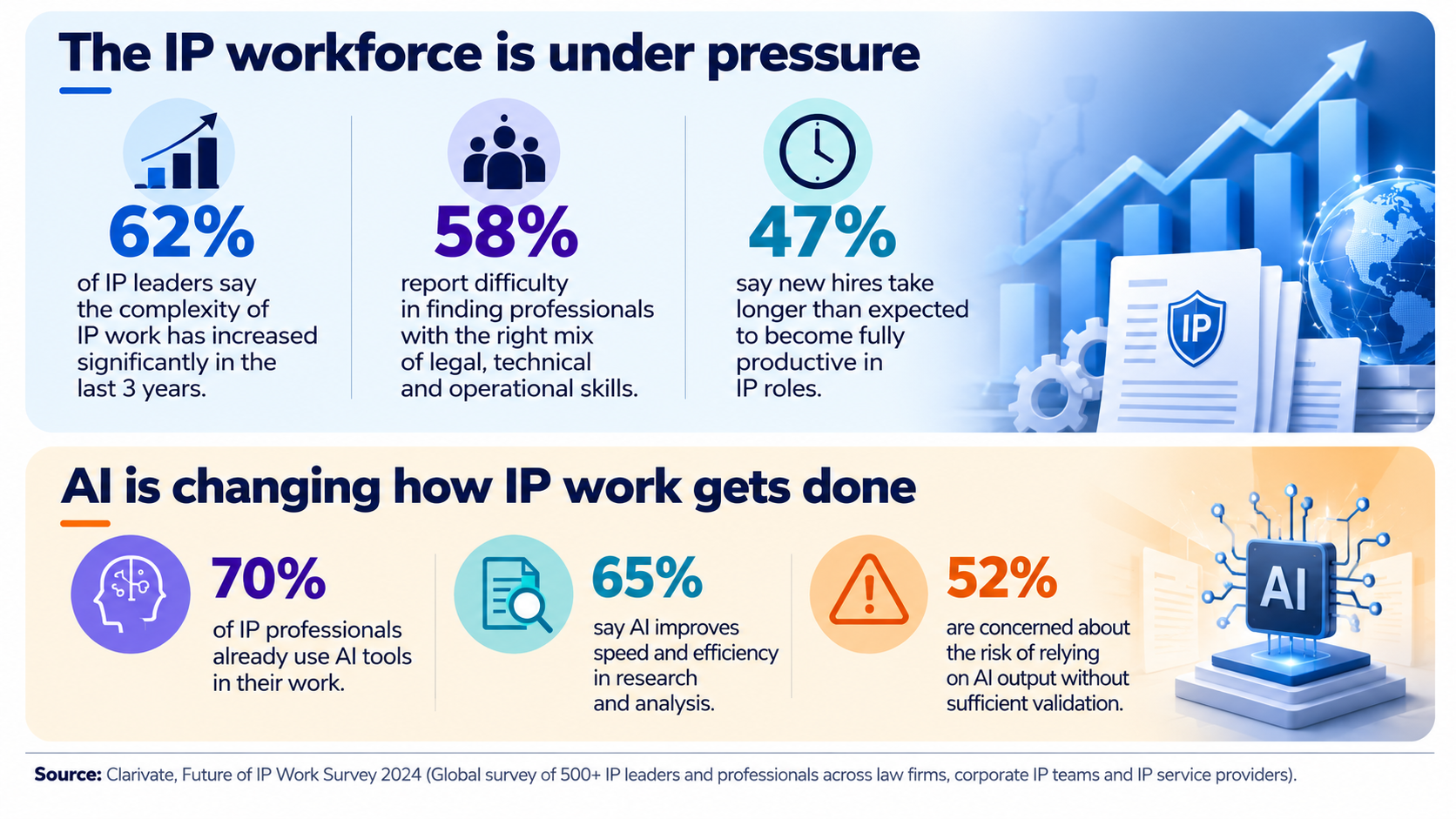
For years, the path to an IP career was relatively straightforward. Learn the law, understand the procedures, gain experience and develop professional judgement
That model is changing
An IP professional today may review a patent office communication in the morning, work on an IP management platform, use AI to analyze documents, speak with outside counsel and later explain a portfolio decision to a business team
The job now sits at the intersection of law, process, technology and business
The question is whether our approach to developing IP professionals has kept pace
Knowing the law is only the beginning
Consider a patent communication received by a company. The person handling it understands patent prosecution and knows the relevant deadline. Yet the matter is incorrectly categorized in the system and the required action is missed
Was this a legal knowledge problem? Not necessarily
The person may have understood the law perfectly well. What they lacked was the ability to connect the legal requirement with the operational process, the technology system and the consequences of getting it wrong
This distinction is becoming increasingly important. Knowledge tells you what the rule is. Capability tells you what to do with it
AI is making the distinction even clearer
Artificial intelligence is already changing how IP professionals research, analyze and manage information
A patent professional can ask an AI tool to summarize prior art or analyze a prosecution history in seconds
But what happens when the answer sounds convincing and is wrong?
An experienced professional is more likely to question the result, verify the underlying sources and recognise an unusual conclusion
A less experienced user may simply accept the answer. The technology is the same. The difference is professional judgement
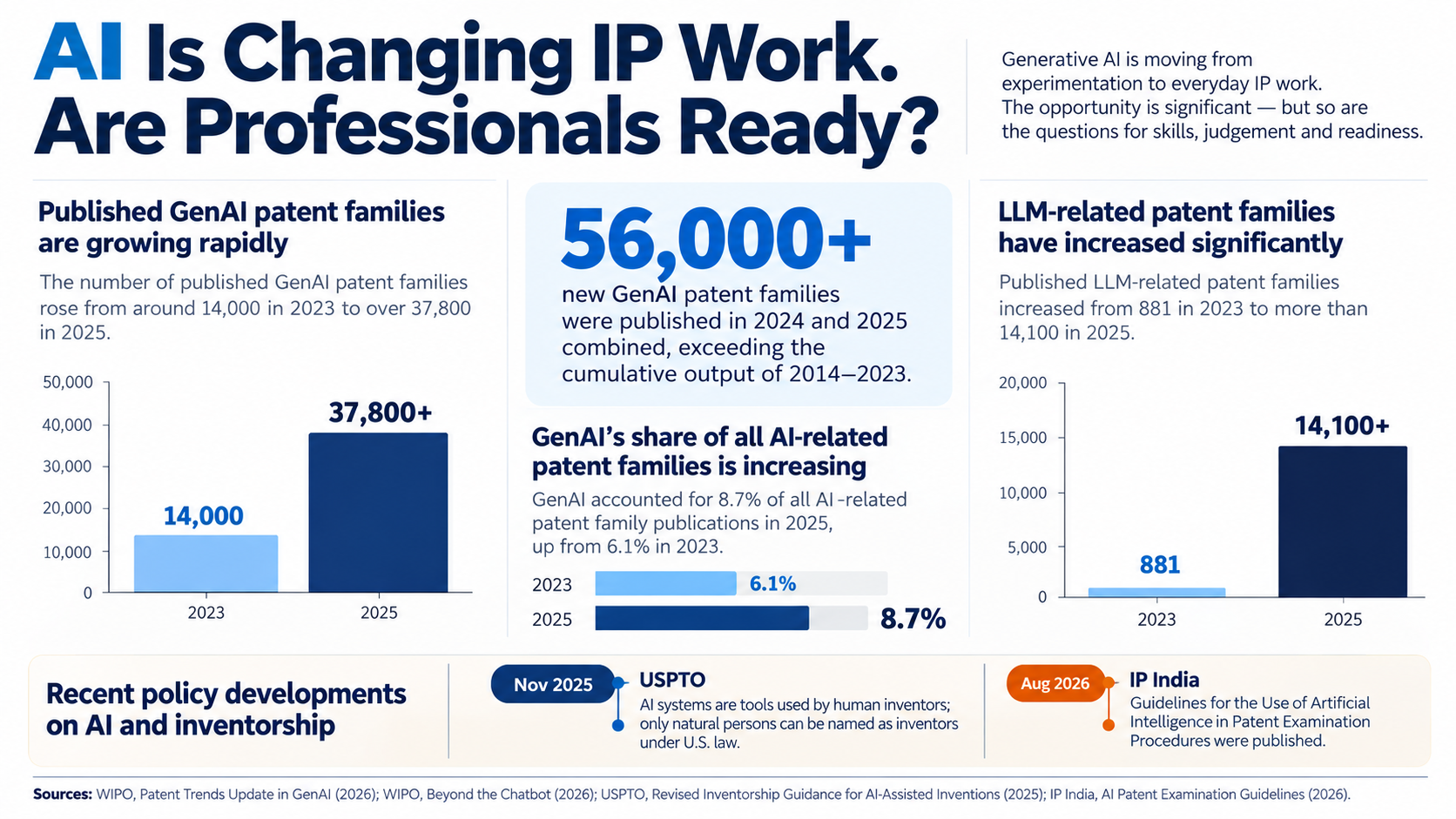
The USPTO's approach to AI-assisted inventions illustrates the point. Its revised inventorship guidance confirms that AI may assist an invention, but inventorship remains limited to natural persons under U.S. law
As AI becomes more capable, the ability to question, verify and interpret its output may become one of the most valuable IP skills
The challenge starts in education
The skills gap also raises questions for law schools
A student may graduate with a strong understanding of patentability, infringement and trademark law, but encounter something very different in the workplace: docketing systems, prosecution workflows, portfolio management, client reporting and AI-assisted research
The answer is not to turn law schools into corporate training centres.
It is to create stronger connections between legal education and professional practice.
Students could work through simulated prosecution files, conduct a trademark clearance exercise or assess an AI-generated analysis containing deliberate errors.
They would still be learning the law.
They would simply be learning how to use it.
The business cost of the gap
For businesses and IP service providers, capability gaps often remain invisible until something goes wrong.
A missed deadline, repeated rework, slow onboarding or dependence on one experienced employee may appear to be separate operational issues.
Often, they have the same underlying cause: the organisation has not built enough capability around its IP work.
This is why training should not be measured only through course completion or training hours.
More useful questions are
- Can employees perform the work independently?
- How quickly do new employees become productive?
- Can teams handle exceptions?
- Are errors declining?
- Can professionals use AI without surrendering judgement?
These measures tell us whether learning has actually become capability
The new IP skill set
The future IP professional will still need strong legal knowledge
But around that foundation, the profession increasingly requires process understanding, technology literacy, business awareness and the judgement to know when something does not look right
That is the real IP skills gap
It is not simply that professionals need to know more
They need to be able to do more with what they know
And as IP becomes increasingly digital and AI-enabled, organisations that build that capability deliberately may have an advantage that technology alone cannot provide