 Lexorant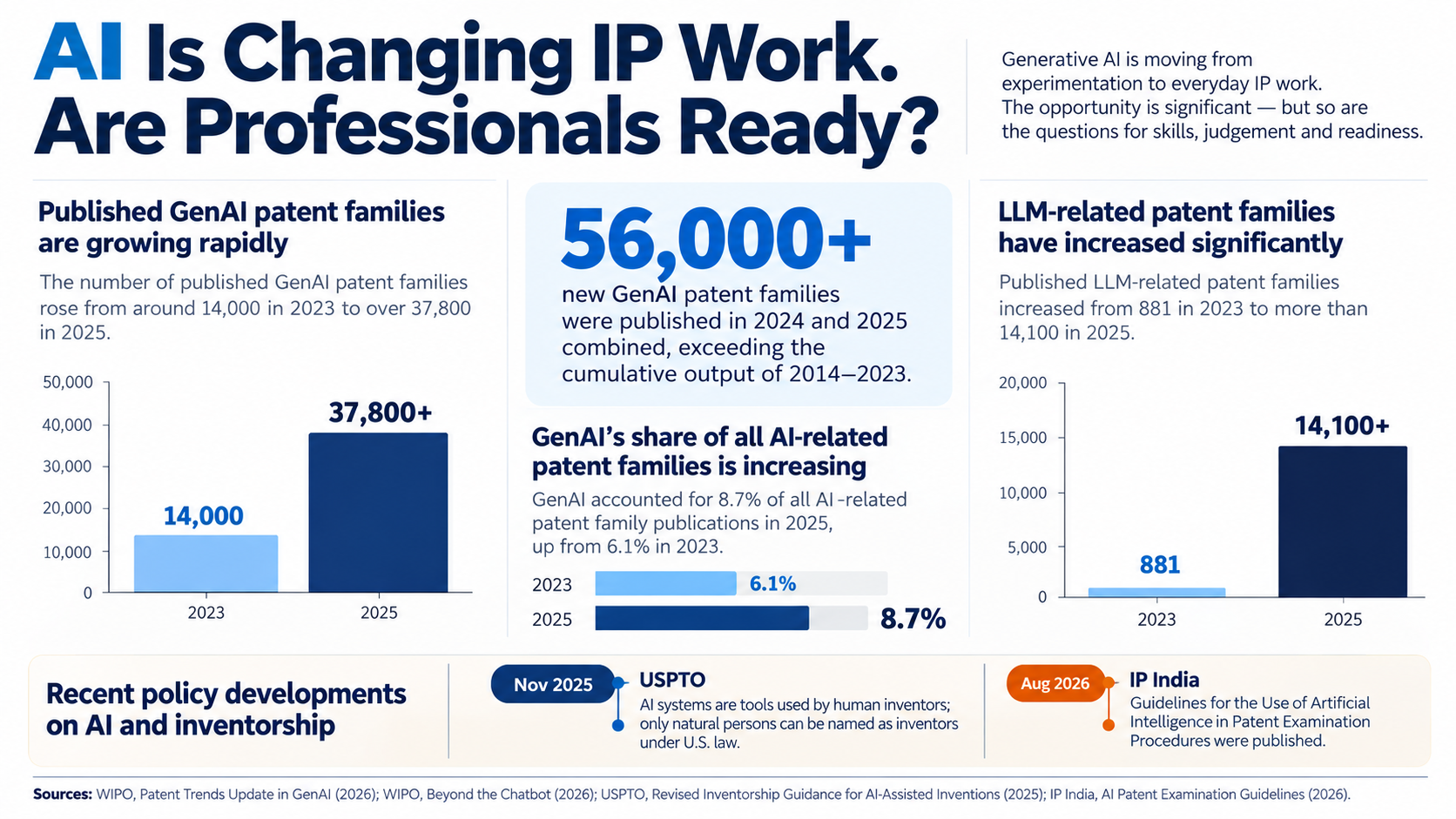
A patent professional used to spend hours searching prior art, reviewing documents and preparing analysis. Today, AI can do parts of that work in minutes.
That sounds like progress. It is. But it also changes what being good at IP means.
WIPO’s latest data shows just how quickly the technology itself is moving. Published GenAI patent families increased from about 14,000 in 2023 to more than 37,800 in 2025. More than 56,000 GenAI patent families were published during 2024 and 2025, exceeding the total from the previous decade.
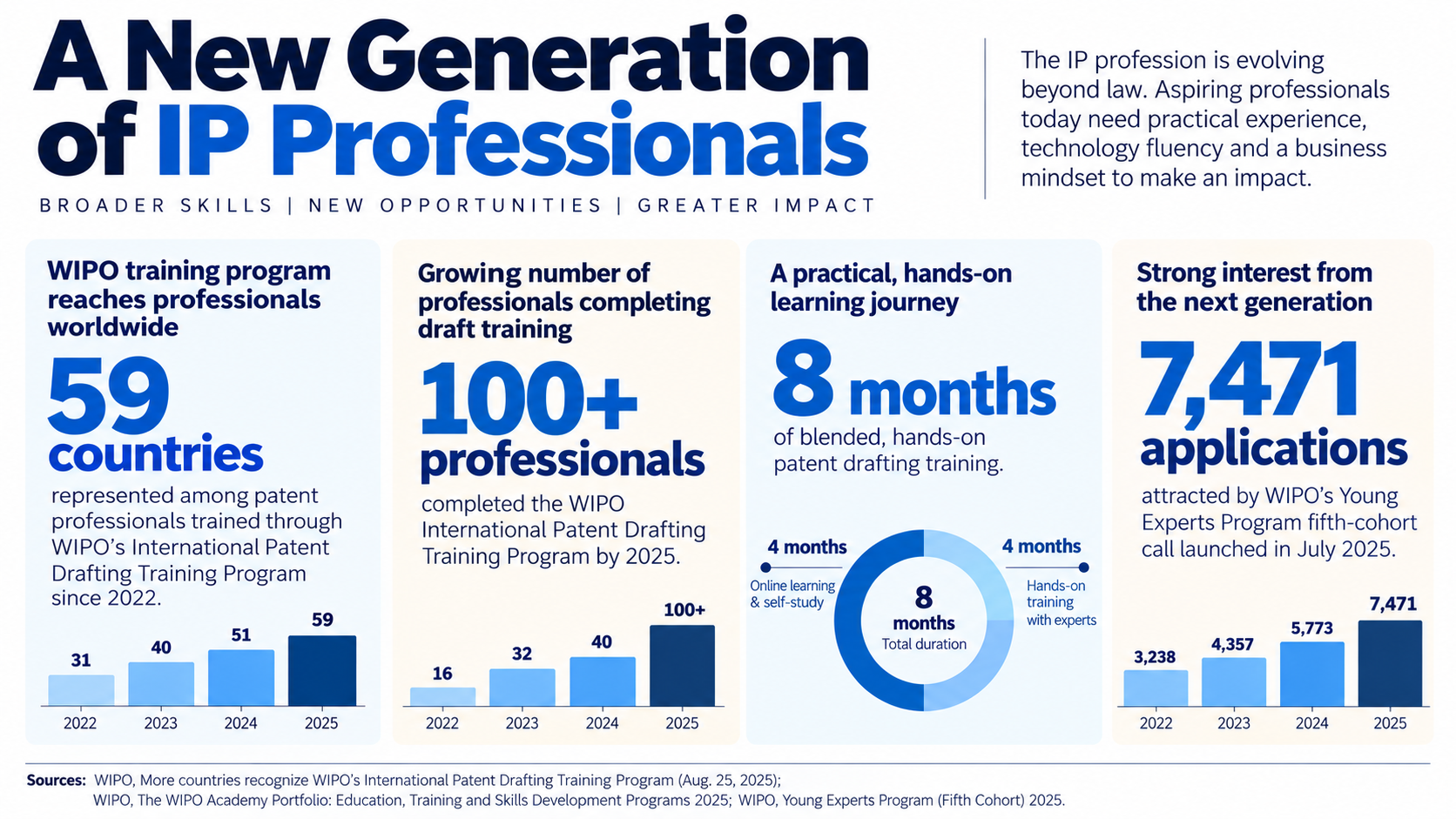
For IP teams, this creates an interesting problem. The technology is advancing faster than many traditional training programs.
Consider a simple scenario. An analyst uses an AI tool to identify potentially relevant prior art. The tool produces an impressive list of documents and a convincing summary. But one critical reference is misunderstood because the AI has interpreted a technical term incorrectly.
The problem is not that AI made a mistake. The problem is if nobody recognised the mistake.
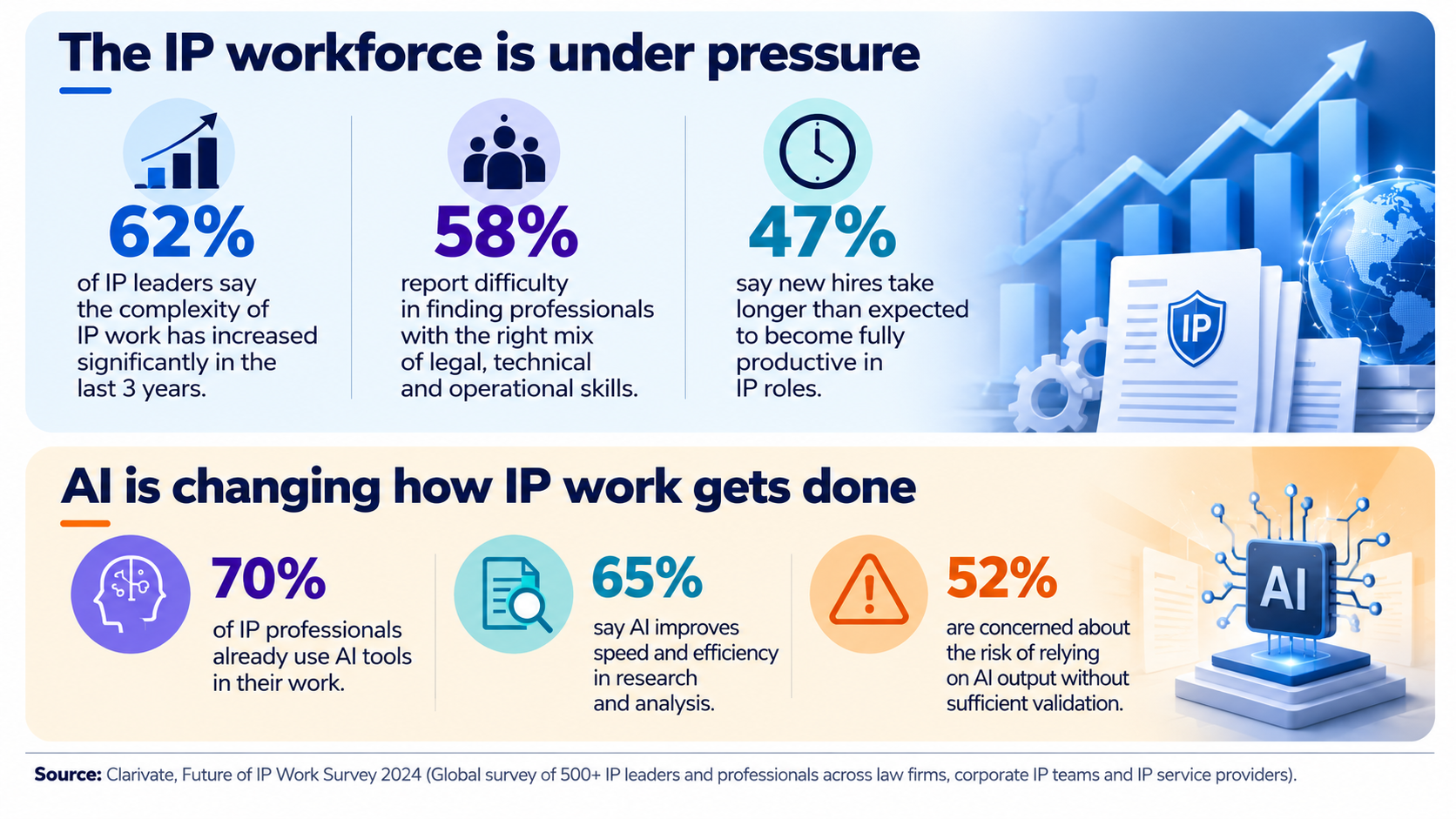
That is why the emerging IP professional needs a different skill set. Knowing patent law remains essential, but professionals increasingly need to understand AI-assisted research, data interpretation, validation, prompt design, technology concepts and professional judgment.
Regulators are adapting too. In November 2025, the USPTO clarified that AI systems can assist inventors but cannot themselves be named as inventors under U.S. law.
India is moving in the same direction. In August 2026, IP India published Guidelines for the Use of Artificial Intelligence in Patent Examination Procedures, alongside its updated guidance on computer-related inventions
The message is becoming clear. AI is not removing the need for IP expertise. It is raising the standard for it. The strongest professionals will not necessarily be those who use AI the most. They will be those who understand where AI adds value, where it can fail and where human judgment must remain in control. For organisations, this means AI adoption cannot stop with buying a tool. It needs capability building. The future IP workforce will be a combination of legal knowledge, technological fluency and professional judgment. AI can accelerate the work. But IP professionals still have to decide what the work means
Sources